Table of Contents
Instructional coaching provides tailored, continuous assistance that enables teachers to contemplate their methods, enhance particular strategies, and develop confidence gradually. Coaching broadens development through collaboration, trust, and intentional dialogue instead of assessing performance. In this article, we examine how instructional coaching enhances teaching practices, fosters ongoing professional development, and aids in broader school enhancement.
What Instructional Coaching Is and Why It Matters
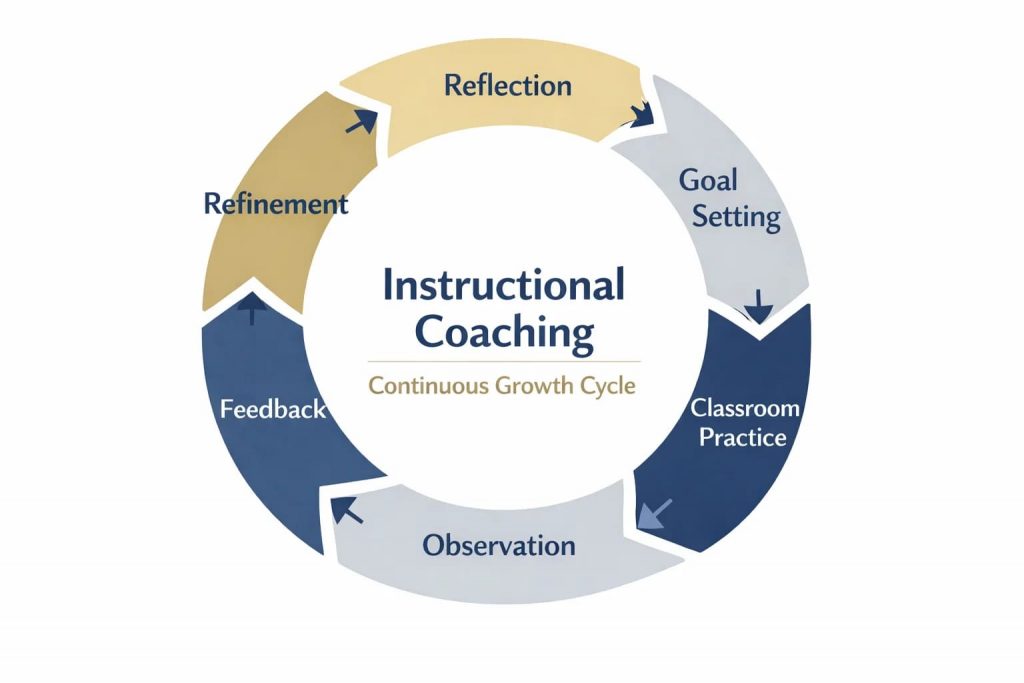
Instructional coaching is a type of professional development that is integrated into daily teaching practices. It emphasises enhancing classroom practices via consistent, organised teamwork among educators and coaches. In contrast to appraisal or inspection, coaching is not evaluative. Its aim is to foster development, not to evaluate effectiveness.
The effectiveness of instructional coaching lies in its ongoing quality. Educators focus on particular elements of their practice gradually, implementing new techniques, assessing results, and modifying their methods with support. This continuous process aids in converting professional development into significant transformation in the classroom.
Roles and Core Functions of a Coach
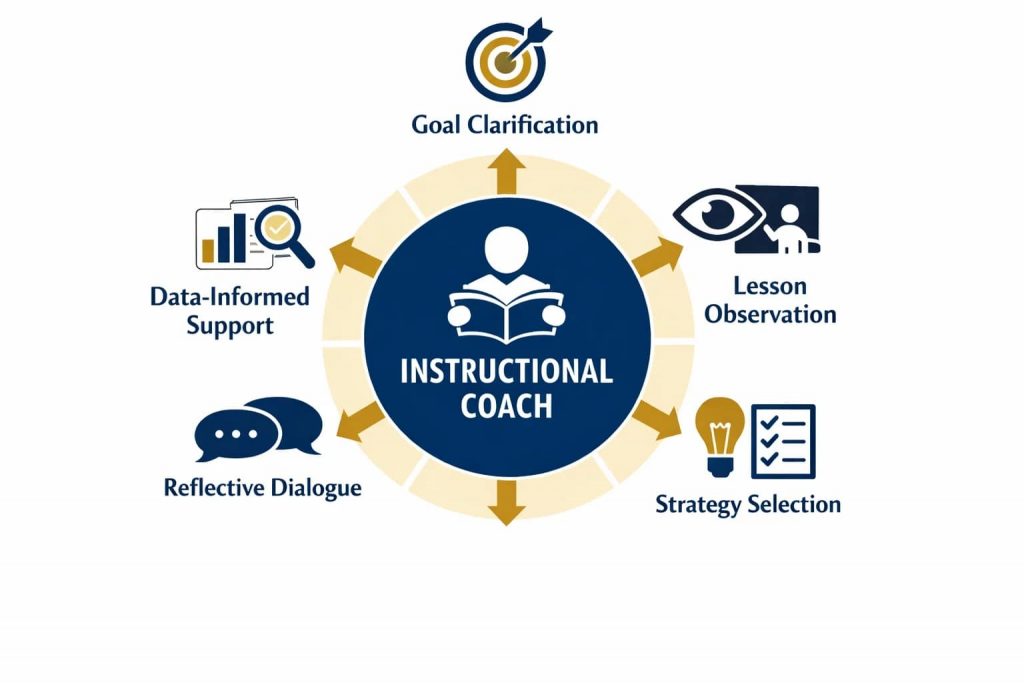
An instructional coach wears several hats, depending on the needs of the teacher and the priorities of the school. At the centre of the role is support. Coaches help teachers think deeply about their practice and make informed decisions about next steps.
Key functions often include:
- Clarifying instructional goals linked to curriculum and learner needs.
- Supporting teachers in selecting and applying evidence-informed strategies.
- Observing lessons with a focus on agreed areas of practice.
- Facilitating reflective conversations that encourage professional thinking.
How Coaching Enhances Classroom Practice
Instructional coaching has its greatest impact where teaching and learning actually happen. In the classroom. By focusing on real lessons, real learners, and real challenges, coaching turns professional development into practical action.
Modelling and Co-Teaching
Observing a strategy implemented can be much more impactful than talking about it theoretically. Coaches frequently demonstrate particular strategies during lessons or collaborate with the classroom teacher. This collaborative practice enables educators to witness methods like questioning, pacing, or differentiation in real time situations.
Co-teaching likewise diminishes risk. Educators can explore new techniques with assistance instead of feeling vulnerable or unsure. Gradually, this fosters confidence and promotes meaningful experimentation instead of superficial change.
Observation and Reflective Dialogue
Observation within coaching is purposeful and focused. Rather than general feedback, coaches and teachers agree in advance on what to observe. This might be student engagement, the use of formative assessment, or transitions between activities.
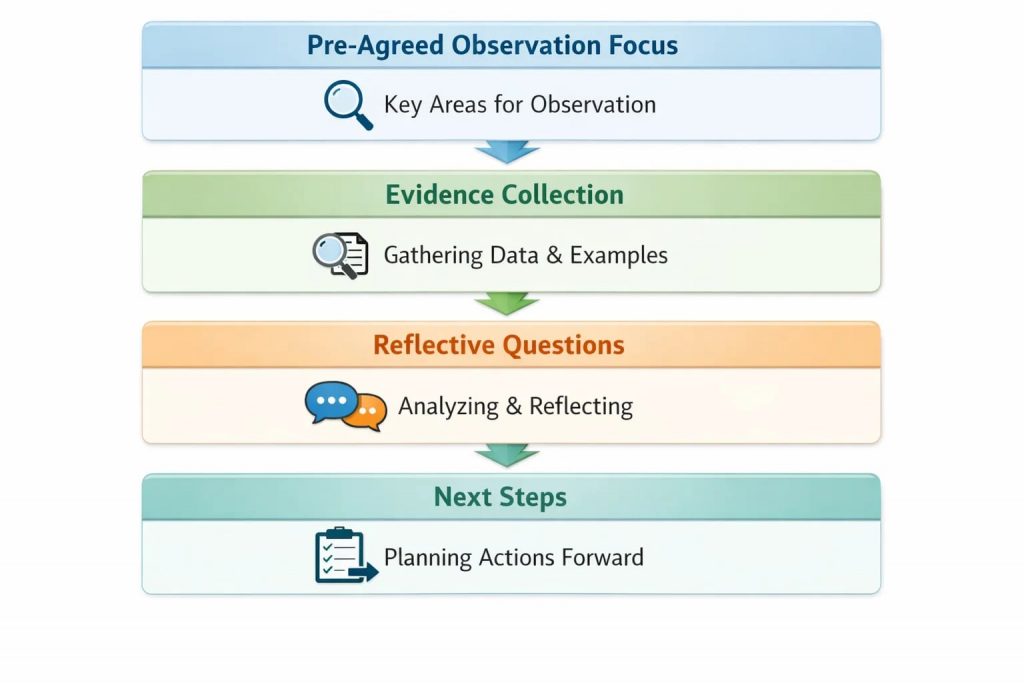
Afterwards, reflection takes centre stage. Coaches use open questions to prompt thinking:
What worked well?
What surprised you?
What might you try next time?
These conversations help teachers develop greater self-awareness and ownership of their practice.
Targeted, Data-Informed Support
Effective coaching is precise. It draws on classroom data such as pupil responses, work samples, or engagement patterns to guide next steps. Instead of broad advice, teachers receive targeted support that responds directly to learner needs.
Building Effective Teacher–Coach Partnerships
The foundation of effective instructional coaching lies in the connection between the coach and the teacher. When this partnership is robust, coaching transforms into a reliable environment for development instead of a cause of stress. Educators are increasingly receptive to self-reflection, more eager to explore innovative methods, and more assured in candidly addressing difficulties.
Trust and Professional Relationships
Trust grows gradually through reliability, regard, and privacy. Coaches need to be clear that their purpose is to support, not assess. This difference is significant. When educators feel secure, they tend to participate more fully, express doubts, and embrace professional risks that result in progress.
Robust professional connections are fostered by listening as much as providing guidance. Coaches who recognise teacher skills and circumstances foster a balanced collaboration where knowledge exchanges occur in both directions.
Collaborative Goal Setting
Successful coaching starts with common objectives. Instead of setting targets, coaches collaborate with teachers to recognise priorities that are relevant and feasible. These objectives are typically precise, centred around the classroom, and tightly connected to learner achievements.
Specific objectives provide guidance for coaching. They assist in organising observations, directing reflection, and showcasing progress. When educators share ownership of their objectives, coaching becomes meaningful and inspiring instead of prescriptive.
The Wider Impact on School Improvement
Instructional coaching does more than support individual teachers. When implemented consistently, it strengthens the quality of teaching across the school and contributes to long-term improvement. The impact is cumulative, shaping how staff collaborate, reflect, and respond to learner needs.
Improving Pedagogical Consistency
Coaching helps create a shared understanding of effective teaching. As teachers engage in similar cycles of reflection and practice, common approaches begin to emerge. This does not mean teaching becomes uniform. Instead, it ensures that high-quality strategies are applied consistently while still allowing teachers to adapt them to their context.
Over time, this consistency supports smoother learner experiences across year groups and subjects. Expectations become clearer, transitions improve, and learners benefit from coherent instructional approaches.
Strengthening Professional Culture
A strong coaching programme reinforces a culture of learning among staff. Teachers become more comfortable discussing practice, sharing ideas, and seeking feedback. Professional dialogue shifts from compliance to curiosity.
When Teaching Practice Becomes a Shared Craft
Instructional coaching works because it respects teaching as a complex, evolving profession. It creates space for teachers to think deeply about their practice, test new ideas, and refine their skills with guidance rather than judgement. Through sustained collaboration, coaching strengthens confidence, sharpens instruction, and keeps professional learning closely connected to the classroom.
When schools invest in instructional coaching, they invest in people. The result is not only improved teaching practice, but a professional culture where growth is expected, supported, and valued over time.
To explore professional learning pathways that strengthen teaching practice and instructional leadership, visit AISL Academy.
What Makes Instructional Coaching Powerful
- Supports sustained, classroom-based professional learning rather than one-off training
- Builds teacher confidence through modelling, reflection, and targeted feedback
- Encourages thoughtful use of data to inform instructional decisions
- Strengthens professional relationships grounded in trust and collaboration
- Contributes to consistent teaching quality and long-term school improvement