Table of Contents
Integrating Assessment for Learning into daily instruction necessitates deliberate decisions. Educators require effective strategies that seamlessly integrate into lessons, encourage reflection, and offer valuable feedback while minimising extra workload. In this post, we examine the true essence of AfL, its application through straightforward classroom techniques, and its role in fostering a learning environment where progress is ongoing and collective.
What Assessment for Learning Really Means
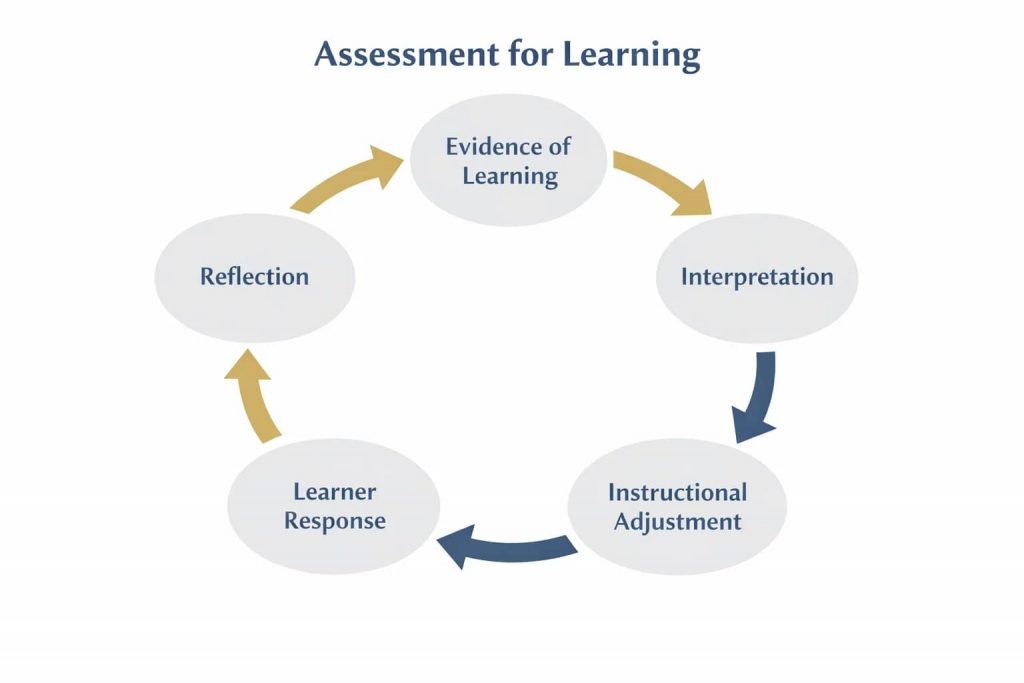
Assessment for Learning is a teaching method that employs learning evidence to inform subsequent actions. It centres on comprehending where students currently stand in their thought processes, where they need to progress, and how instruction can assist them in achieving that. AfL is continuous and engaging. It occurs throughout lessons, not only at the conclusion of a unit.
Instead of focusing solely on achievement, AfL emphasises understanding. Educators collect data by means of inquiries, conversations, observations, and brief activities. That data subsequently influences choices regarding speed, clarification, and assistance. When AfL is effectively integrated, assessment turns into a component of learning instead of being imposed on learners.
Key Principles Teachers Should Know
Effective Assessment for Learning is grounded in a small number of core principles. These guide everyday classroom practice and keep AfL purposeful rather than performative.
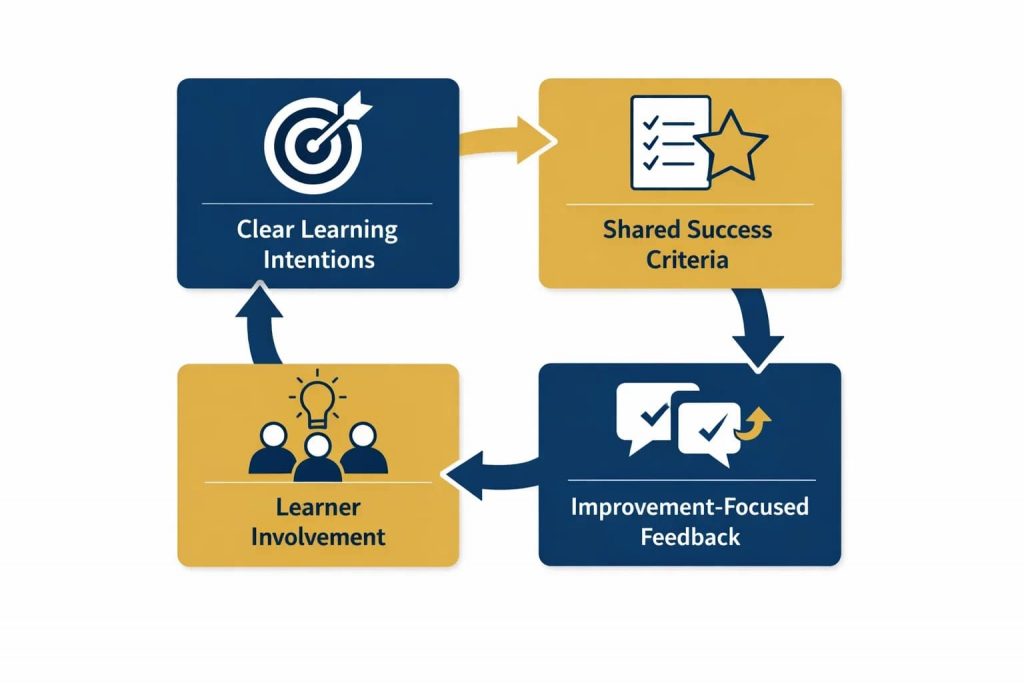
- Learning intentions are clear and shared with learners.
- Success criteria describe what good learning looks like in accessible language.
- Feedback focuses on improvement, not just performance.
- Learners are actively involved in assessing their own progress.
Practical AfL Strategies for the Classroom
Assessment for Learning is most impactful when integrated into daily practices. Simple, steady tactics usually create a greater effect than intricate systems. The essential task is to collect valuable data swiftly and utilise it to influence future actions.
Exit Tickets and Quick Checks
Exit tickets provide an easy method to gauge student comprehension at the conclusion of a lesson. A brief question, a reflection cue, or a solitary issue can uncover what has been grasped and what requires further review.
Brief assessments during classes fulfil a comparable function. Positive or negative reactions, small whiteboards, or brief surveys offer immediate input. These instances enable educators to modify explanations, revisit ideas, or advance learning with assurance.
Peer and Self-Assessment Techniques
When students evaluate their own work or that of their classmates, they gain a deeper understanding of quality and improvement. Organised peer evaluation, led by explicit success criteria, assists learners in expressing strengths and weaknesses.
Self-evaluation fosters responsibility. Straightforward prompts like “What challenges did I encounter?” or “What assisted my learning today?” facilitate reflection without consuming too much time. With time, these practices enhance metacognition and autonomy.
Using Questioning to Promote Thinking
Enquiry lies at the core of Assessment for Learning. Open questions encourage students to clarify their thought processes, defend their decisions, and consider different perspectives. The duration of the wait is important in this situation. Taking a moment longer before replying frequently results in more profound contemplation.
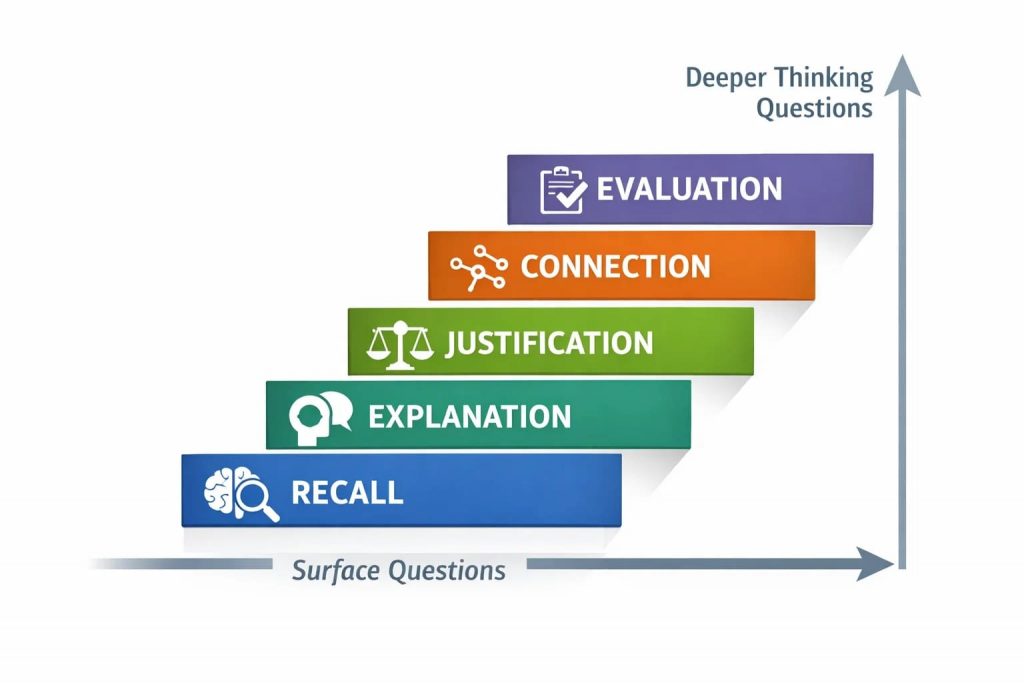
Purposeful questioning is effective. Educators design inquiries that explore comprehension instead of merely verifying memory. The collected responses inform subsequent actions, whether that involves enhancing learning or offering further assistance
Making Feedback Actionable for Learners
Feedback is most effective when learners understand how to use it. Observations that merely outline performance seldom result in enhancement by themselves. Constructive feedback aids learners in understanding how to progress and motivates them to take ownership of the subsequent phase of their education.
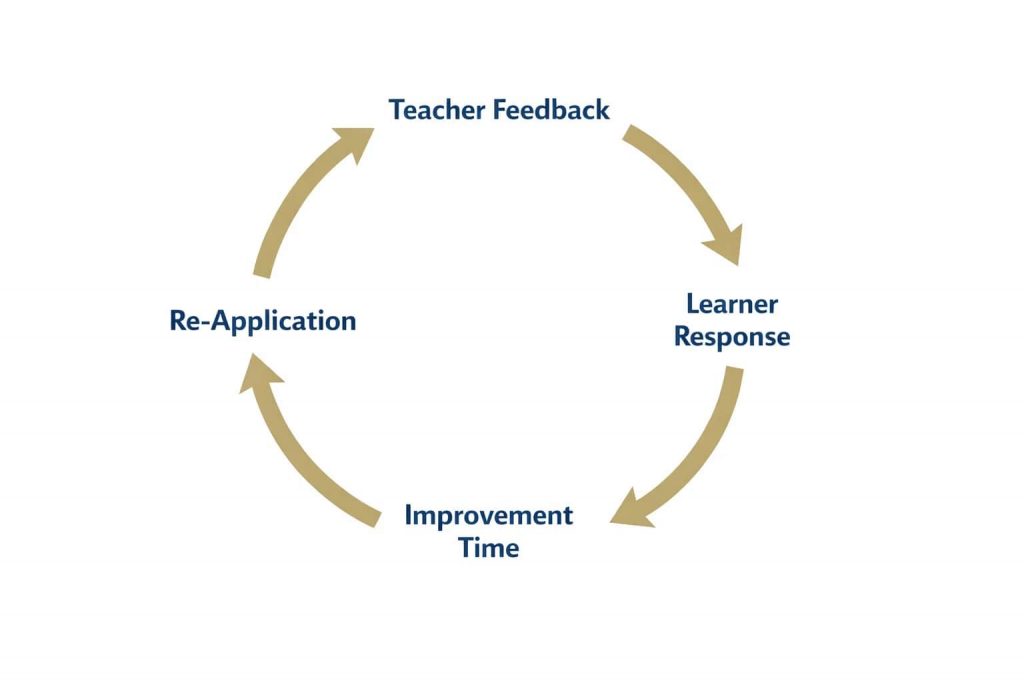
Feedback Loops
Constructive feedback functions as a cycle instead of a single remark. Educators offer direction, students react, and time is allocated to implement that direction. This could involve going back to a task, improving a response, or utilising suggestions on a related assignment.
Simple feedback loops are frequently the most efficient. A short remark with instant enhancement can be more effective than thorough feedback given days afterward. When students view feedback as a continuous dialogue, they are more inclined to interact with it and use it intentionally.
Goal Setting and Success Criteria
Clear goals give feedback direction. When learners understand what they are aiming for, feedback becomes meaningful rather than abstract. Success criteria should be specific, visible, and linked directly to the learning intention.
Building a Classroom Culture That Supports AfL
Assessment for Learning thrives in classrooms where learners feel safe to share ideas, ask questions, and take risks. Culture shapes how assessment is received. When the environment encourages curiosity rather than comparison, AfL becomes a natural part of learning rather than a source of pressure.
Encouraging Reflection
Reflection helps learners make sense of their progress. Simple routines can prompt thoughtful reflection without disrupting lesson flow. A short pause at the end of a task, a reflective question on the board, or a learning journal entry can all help learners consider what they have learned and how they learned it.
Over time, regular reflection builds self-awareness. Learners begin to recognise patterns in their thinking and develop strategies that support improvement.
Normalising Mistakes as Part of Learning
Mistakes play a vital role in learning, yet many learners are reluctant to share them. Teachers can model a positive response to error by treating mistakes as opportunities for discussion rather than correction.
Turning Assessment into Everyday Learning
Assessment for Learning is most powerful when it becomes part of daily teaching rather than an added layer of practice. By using evidence of learning in real time, teachers can respond more effectively, support learner reflection, and create lessons that adapt to need rather than follow a fixed script. AfL strengthens understanding, builds confidence, and keeps learning moving forward for everyone in the classroom.
To explore professional learning that supports effective assessment practice and teaching development, visit AISL Academy.
AfL in Practice: What Matters Most
- Assessment for Learning focuses on guiding next steps, not judging performance
- Simple strategies such as questioning, exit tickets, and reflection can have high impact
- Feedback is most effective when learners are given time and support to act on it
- Clear goals and success criteria help learners understand what quality looks like
- A supportive classroom culture makes reflection and risk-taking part of everyday learning
Further Professional Learning
Educators looking to deepen their understanding of Assessment for Learning and strengthen everyday classroom practice may find the following courses from AISL Academy valuable.
Exploring the Core Principles of Assessment and Reporting
Focuses on the principles that underpin effective assessment and reporting, helping educators use evidence of learning to inform teaching and communicate progress clearly.