
Table of Contents
Leadership in technology enhanced learning is not just about being aware of the newest tools. It’s about integrating technology with teaching methods, protection, fairness, and overall school enhancement. In this article, we investigate the true definition of digital leadership in contemporary schools and how leaders can establish a strategic, future-oriented strategy that aids teachers, safeguards learners, and enhances results throughout the community.
Defining Digital Leadership for Modern School Contexts
Moving Beyond Devices and Tools
Digital leadership in 2025 is not measured by how many devices a school owns or how many platforms teachers can access. It is defined by how technology is used to improve learning, streamline workload, and support wellbeing. Leaders focus on purpose, not products. They ask questions such as: How does this tool help learners think more deeply? How does it reduce unnecessary tasks for teachers? Does it strengthen inclusion and accessibility?
Linking Leadership Vision with Digital and AI Strategy
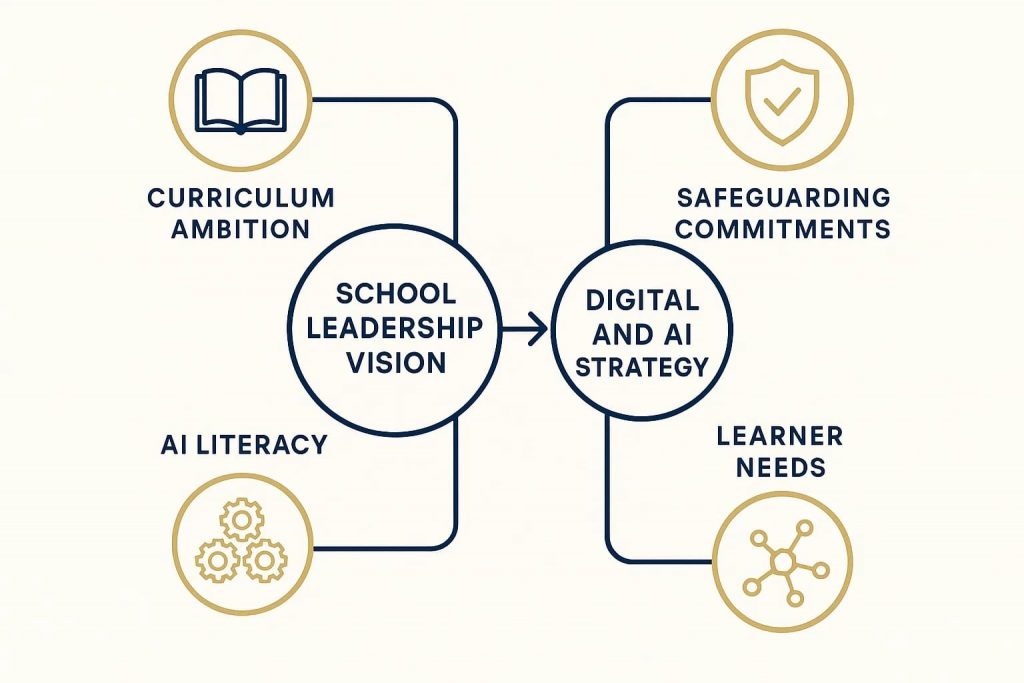
Every school needs a clear digital direction. That vision should be tied to the broader educational goals of the school, curriculum ambition, safeguarding commitments, and the specific needs of learners. In 2025, this vision includes AI literacy, responsible use, and ongoing evaluation of risks and opportunities.
Successful leaders link digital strategy to overall school enhancement, making certain that technology supports learning instead of diverting attention from it. They view AI as a means of enhancement rather than a substitute, effectively communicating its role in assisting both educators and students
Core Competencies of Effective Digital and AI Champions
Strategic Decision-Making in a Digital Landscape
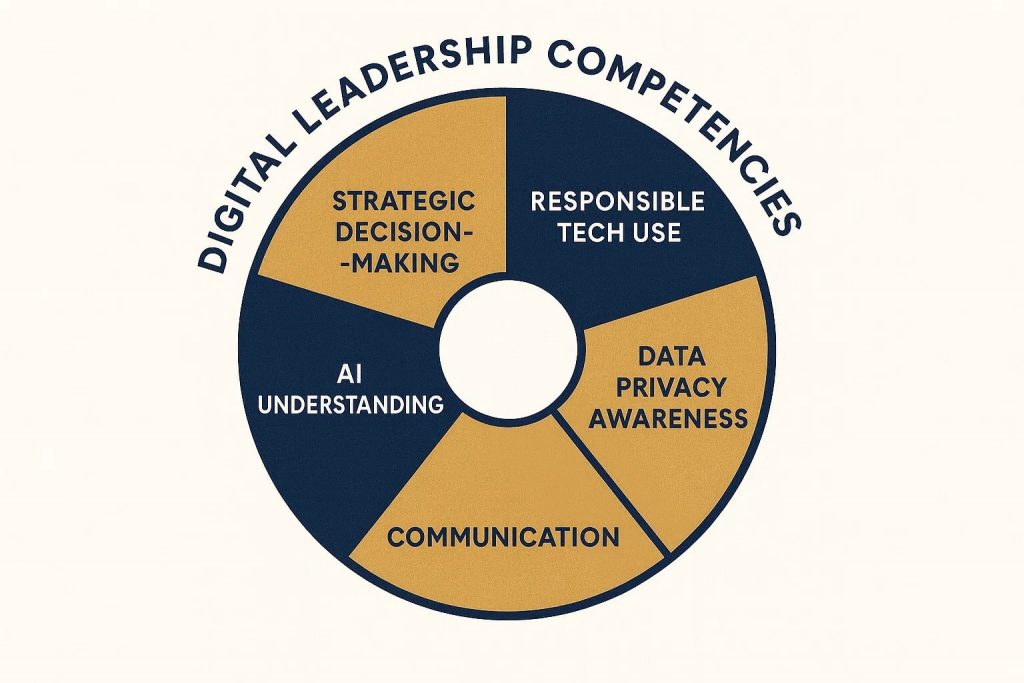
Leaders must navigate a digital environment that changes quickly. Strategic decision-making involves evaluating tools against clear criteria: impact on learning, data privacy, accessibility, workload reduction, and alignment with school values. Effective leaders avoid reactive adoption. They rely on evidence, pilot testing, and transparent communication before rolling out new systems.
Modelling Confident and Responsible Tech Use
A digital strategy succeeds only when leaders model the behaviours they expect from others. This means using technology thoughtfully, showing awareness of risks, and demonstrating how AI can support, not replace, professional judgement. When leaders use tools responsibly, teachers feel more confident exploring them. When leaders raise questions about bias, privacy, or safeguarding, staff learn to apply that same critical thinking.
Building a Digital School Culture
Creating Policies That Support Innovation
Defined policies remove ambiguity and provide teachers with the assurance to experiment with new methods. Guidelines must define the criteria for choosing digital tools, the methods for managing data, and the principles of responsible usage in educational settings. Effective policies provide a framework while allowing space for exploration. They help staff to understand expectations and alleviate uncertainty when trying out new digital methods.

Empowering Teachers Through Professional Development
Professional learning is the core of a robust digital environment. Educators require time to investigate tools, develop new abilities, and understand how technology integrates with teaching methods. Brief workshops, collaborative learning sessions, and opportunities to connect with digital mentors can facilitate this development. Training should seem applicable and meaningful to everyday teaching. When educators feel supported, they are more inclined to experiment with new strategies and communicate successful practices with peers.
Leading Digital Transformation in 2025
Designing Systems and Workflows That Scale
Digital transformation requires systems that support growth rather than adding complexity. Leaders should prioritise platforms that integrate well, reduce administrative work, and create smooth user experiences for staff and learners. Scalable workflows help the school avoid constant change and promote long-term stability. Simple and reliable systems allow teachers to focus on teaching rather than troubleshooting technology.
Ensuring Equity, Accessibility, and Safe Use of Technology
Equitable access must guide every digital decision. Schools need to ensure that all learners can benefit from technology regardless of background or circumstance. Accessibility features, differentiated tools, and thoughtful device policies play a key role. Safety is equally important. Leaders must review risks related to online behaviour, data privacy, and content quality. Safeguarding sits at the centre of digital transformation and should guide every stage of adoption.
Measuring the Impact of Digital Leadership in Schools
Indicators of Successful Digital Transformation
Impact becomes visible in many small shifts across the school. Look for signs such as:
- Teachers spending less time on administrative tasks.
- Learners engaging more deeply with content.
- Staff using digital tools with confidence and purpose.
- Clear improvements in accessibility and inclusion.
- Fewer technical barriers interrupting lessons.
Aligning Progress with Whole-School Improvement Plans
Digital progress should never exist in isolation. It works best when linked directly to school improvement priorities. Leaders can review curriculum goals, wellbeing data, safeguarding requirements, and assessment practices to check whether digital tools make a positive difference. When digital development aligns with broader aims, it becomes a natural part of school growth rather than an add-on that competes for attention.
To develop your expertise and lead meaningful digital transformation, explore the Digital Leadership Career Pathway at AISL Academy.